Four chairs, one missing record
The Reliance Gap
Four people have to answer for a decision none of them saw. Here is what that costs, chair by chair.
Start with yours.
We sit in that seat narrowly, and we do not audit, certify, attest, or opine.
We produce the evidence that lets you work from artifacts instead of assertions, sometimes directly and increasingly through the firms already in the chair.
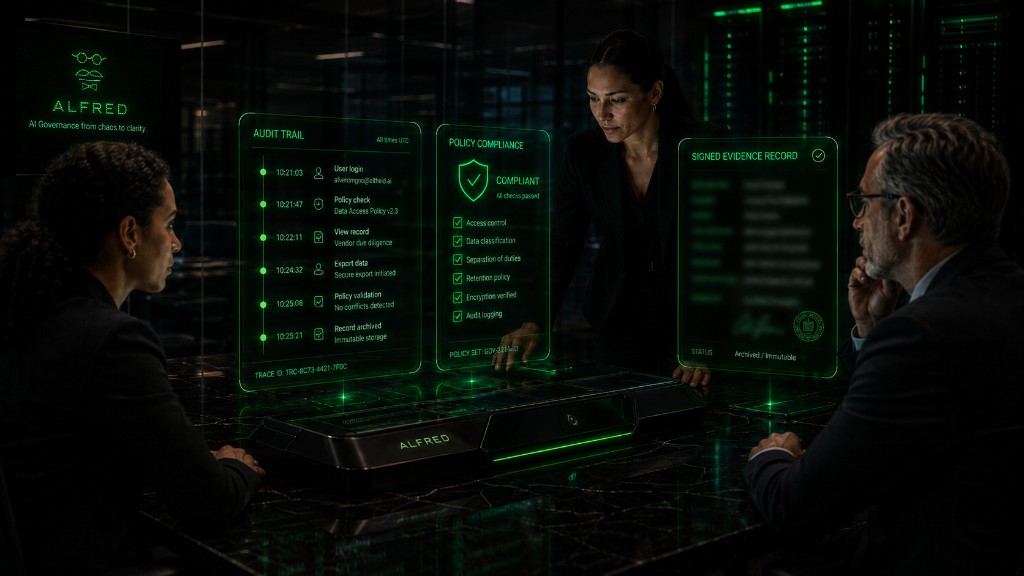
Assurance and audit
Where you are
Clients are deploying AI into processes you are engaged to opine on.
The engagement letter did not change, but the exposure did.
What is in the way
You are asked to evaluate whether a control operated, and you are handed a management assertion and a log written by the system under examination.
A control that probably fired is not one you can rely on, but saying so costs you the client while accepting it costs you your name.
What changes
Evidence arrives as signed records of individual decisions, cut when the decision happened rather than reconstructed during fieldwork, and tamper-evident means any later alteration is detectable by anyone holding the record.
You test decisions instead of interviewing people about them, and independence stops being asserted and starts being structural.
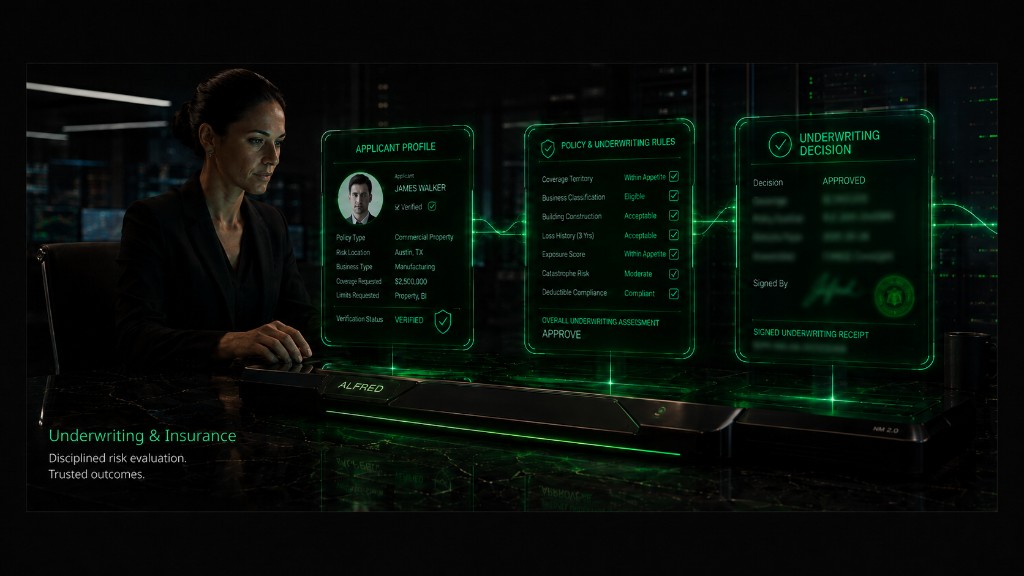
Underwriting and insurance
Where you are
You are being asked to write coverage against AI-driven loss.
You are being asked to price it against a control environment you cannot inspect and a loss history that barely exists.
What is in the way
Two applicants describe identical governance, but one has controls that fire on every decision and the other has a policy binder.
Nothing in the application tells them apart, so you price for the worse of the two, and at claim time the reconstruction still depends on records the insured controls.
What changes
Control operation becomes an observable, portable fact rather than a representation on a form, visible before you bind and surviving the incident that makes it matter.
You price on behavior instead of assertion, and coverage reaches classes that are uninsurable today only because nobody can price them.
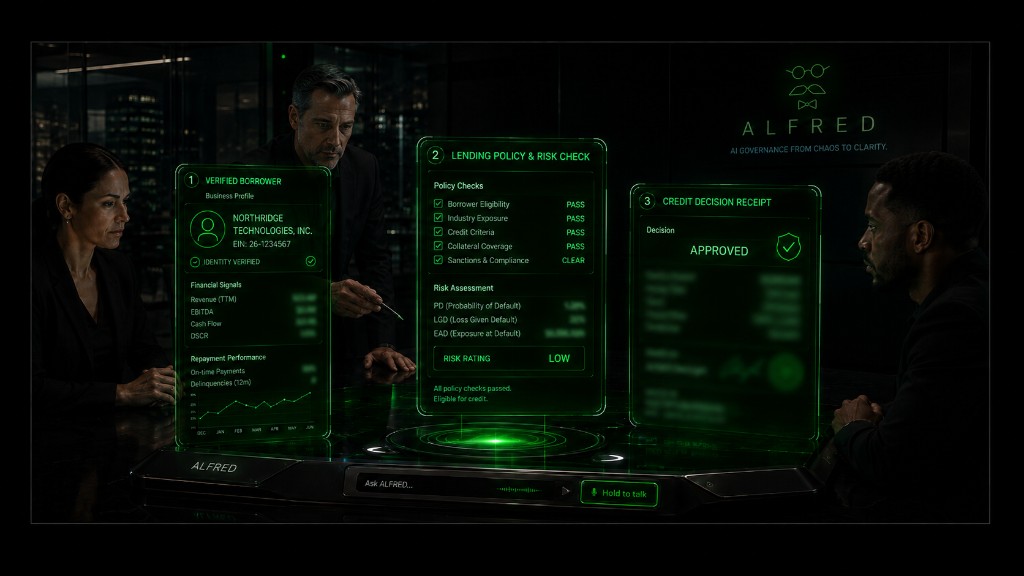
Lending and credit
Where you are
You make credit decisions that have always required a defensible reason.
Your borrowers increasingly run on decisions nobody can evidence.
What is in the way
A decline has to be explained specifically, a model controlled across its lifecycle, and an examiner asks whether the control operated on this file rather than whether the program exists.
Program documentation answers none of that at file level, and two identical credit profiles can hide very different operational risk.
What changes
The governance record attaches to the individual credit action rather than the program description around it, and it survives a model change.
Examination readiness accumulates instead of being assembled the week before, and credit judgment gets one more input while the judgment stays yours.
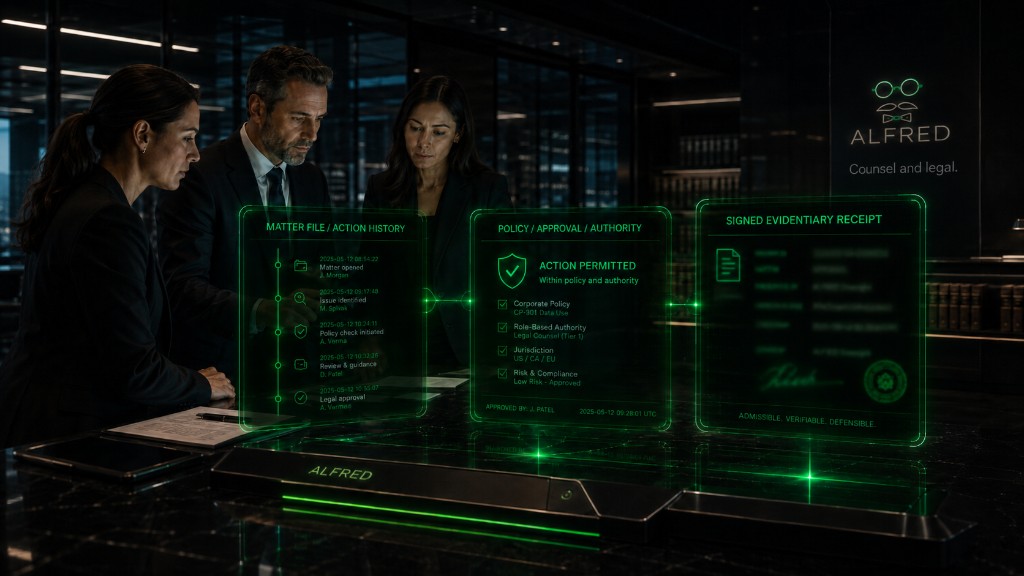
Counsel and legal
Where you are
You will be asked to defend a decision your client cannot fully explain, made by a system your client did not build, on a timeline set by somebody else.
Not one of those three constraints is yours to fix, and all of them are yours to answer for.
What is in the way
The reconstruction happens under adversarial conditions, years later, from logs in a vendor's custody under a contract you did not negotiate.
Human oversight was asserted and never documented, so the answer to who authorized this resolves to a role, a policy, and a shrug.
What changes
Authorization and accountability are recorded as they happen, in your client's custody rather than a platform's, fixed at the moment they occurred.
Defensibility becomes a design property rather than a discovery exercise, and the narrative you argue is the record itself.
Not to judge the decision, but to make sure somebody else can.